Friday, September 23, 2016

Farewell to a great friend


On May 7th of this year, James Thompson, who had been affiliated with Holt Bee Farm for nearly 10 years, passed away following a brief illness. It has taken me all summer to be able to set down and write a "so long buddy" letter. James would have never made the famous bee people list, like the ones who have written bee books or articles in the monthly bee magazines, but here at Holt Bee Farm he is at the top of the list.  

James was always the one who pushed to get the job done, always there to keep everyone motivated. Due to the fact that he avoided political correctness at every turn and that his personality was a bit salty (to put it mildly), he always kept the conversation/argument lively.  I could spend all day telling stories about our time together, but I will use this this post to thank James for all the good times and being a great friend.  If Saint Peter was looking for a good beekeeper, he couldn't have done better.
Thanks James, you are greatly missed.


Friday, August 10, 2012

Here comes Hollywood!

Our very own Bee Man has made his television debut!

Holt Bee Farm has been featured on LiveGreen Tennessee. We are all very excited and proud of Greg!

Check out Season 4 episode 12: http://www.livegreentv.org/watch-full-episodes

Or check it out on YouTube!

 http://www.youtube.com/watch?v=QaoIFMBdP2c&feature=player_embedded

Sourwood...The best there is.

Last Sunday, I was heading up I-40 to the top of the Cumberland Plateau, Crossville, Tennessee, to visit little brother Morris and his wife Maggie. Their place out on Highway 68 is a lovely place to visit and I'm sure to live.  I was looking forward to the visit, but not particularly to the disappointing task at hand: bringing a load of empty honey suppers back home to be treated for wax moths and put to bed for the winter.  Back in June after robbing the bees, I placed clean supers on the hives housed at Morris's farm, hoping to get the suppers filled with the best honey in the world-- Tennessee Sourwood. An old man told me one time God planted the sourwood at higher elevations so the angels wouldn't have to travel so far from heaven to get it.  After tasting it with my wife's buttermilk biscuits, I'm a believer that the old man was right; God had a hand in the placement as well as in the creation.

http://tennesseeplateau.blogspot.com/2009/07/sweet-taste-of-sourwood.html 

I had been told by experts not to expect any sourwood honey this year because of the dry summer. I was a believer there too. After having a cup of coffee, Morris and I put on our bee garb and lit our smokers. He pulled the first top while I manned the smoker.  As the top came up, the bees went down into the super to escape from the smoke. I looked down between the frames and there it was—capped honey! Not only the top super, but the two under it were full. We went on from that hive to the next and the next; all the hives were full of sourwood honey. The excitement was equal to catching a five-pound Tennessee Small Mouth on a fly rod (or how exciting I would imagine that being…I’ve never done that).Sunday was a good day. If you think about it, most days are good for beekeepers if you look real hard.  


I would like to apologize for taking so long since our last post. Funny thing though—not one person complained.

Makes you wonder…    ;)

-greg

Wednesday, June 22, 2011

Cell Block #9

I have just finished reading my favorite bee blog, "Bee Mans Daughter" (Father’s Day Blog). I suggest my readers (all four of them) read this blog. It is innovative, informative, entertaining, and also says nice things about me. You can’t beat that. (Did I mention the author is also my daughter?) Any way the blog is really good, although a fact check sometimes would be in order. As a new-bee, sometimes she doesn’t quite know her head from her hind-end. Here at the Bee Farm, we do not have a Father’s day because when you have a special daughter like we have, every day is Father’s day and Mother’s day. We are truly blessed. (I bet that doesn’t get edited out.) – a note from the editor: You would be correct.

As you know, we have been experimenting with queen rearing. For Bee Keepers, the ultimate high is seeing a beautiful brood pattern, especially knowing he or she grafted the larva, placed the cell in a breeding nuc, and ultimately placed the new queen in the hive. But it is just not as easy as it sounds; there are things like setting up the starter hives, breeding nucs, and watching the calendar (very important). A lot of hardware and bees are also required. You start to think you have done everything right and then you go in to get your new cells, cells that you checked two days earlier, to find them all torn down by a covert queen who either hatched early or came in to this hive by mistake and set up housekeeping. For a big operator, this would be no big deal. But for me, it shut down a third of my queen operations down do it twice and I have nothing to show for twenty days’ work. This makes a chicken rearing hobby look good (until you remember what you wife said about that. Chicken sh*t between your toes as a child can scar you for life apparently).

I am told virgin queens are hard to introduce to a hive, especially if you change races, like Russian to Italian. While in Byrdstown a while back cutting out cells, I cut two open and out came two virgins. I put then in queen cages I always carry in my pocket, took them home, marked them, and placed them in intro-queen cages. I now have two nucs with as good a brood pattern as I’ve seen. They are beautiful, dark Russians. I don't know if I’m good or just dumb enough to try anything (the latter most likely).

As I look up at my meticulously kept records, which consist of a bunch of yellow notes on my computer desk, I see I have a busy week at the end. On the 23rd, I need to take cells out at the home bee yard; on the 24th, I have to take cells out at Dwight's house in Rickman; on the 25th, I need to take cells out in White Co. and also at Moss yard. I’m looking forward to the White Co. cell take out; that is where some of our best survival queen mothers are located (they won’t die). I mistakenly placed a queen in the starter hive last graft and came up with zero cells. I checked the Byrdstown yard Friday and five out of eight nucs had new queens, however some looked a little motley. I'm sure they will improve; it was a bit early to assess.

I have one last thought to share with you today. As you know, I like to work with young people who are interested in bees. Last week while at Dwight's house grafting queens, his daughter Jessica lent a hand. She shows great promise in the grafting field, if for no other reason she can see.

Happy trails!
Greg

Friday, May 27, 2011

Brief Updates from the Farm

I think I may have forgotten everything that was hot on my mine to report; maybe you all will settle for bits and pieces from this old bee mans memory. If not, maybe you should bring up the The Bee Man's Daughter blog; her mind is still nearly new.

First, I would like to bring you up to date on the Shook Swarm from my last blog. Like many of other things I do, I'm not for sure it worked out so well. The original hive was left weakened and the new hive looks very well; the amount of comb honey we get will tell of our success or failure. We have also finished a resent graft and have another underway, yet the weather has not been good for breading queens, as we hit somewhat of cold snap.

May 7th, we had our Cookeville Beekeeping meeting here at the farm and about 20 or 25 people were in attendance. Mike Haney, president of the Cookeville club, did a great job showing some of our "new-bees" what to look for in a hive. The info he passed along should be helpful to them, as well as to the more seasoned bee keepers. Refreshments were provided by Carolyn, and they were great as usual. I enjoyed meeting new members and talking bee stuff with all who attended, and I would like to thank them for coming. Our door prize, a new swarm that came out one hour before the meeting and rested 65 feet up in a pine tree, was rejected by everyone . The swarm now has been added to our local feral stock. We wish them luck as they will provide good breeding stock for our queens. I'm cutting this short as not to bore you with our day-to-day bee stuff (just a few swarms and what not). I really need to learn to keep better notes.

Enjoy a few pics from the recent bee meeting!


Friday, May 20, 2011

Shook Swarms, Brother Glenn, and May Update

I think I have checked all our hives and most everything is doing well; we have experienced growth this year more than expected. I have done almost everything I know to stop the bees from swarming, sometimes I think it would do better just to let them go, but that would cut down on our honey production. I’m sure some have swarmed unnoticed and added to the feral population in the woods.

I watched a video last winter, “Making Comb Honey” with Ken Lasing of Windermere Farms and Apiaries, using the “shook swarm” method I've been dying to try. Here is a link to the video. It is about half an hour long. Also, here is a page of bee keeping videos that may be of interest. (Note: while we attempt to stay "apolitical" in this blog, the editor must mention that this bee keeping video selection page seems to support a certain political candidate.)

What you do is move the parent hive to a new location nearby, place a new bottom board than a medium super with foundation, than a queen-excluder, then two supers with thin foundation. Place a sheet in fount of the old location for a path into the new hive at the old location, than take all the frames of bees and the queen from the old hive at the new location give them a good shake over the sheet. Then place them back in the old hive with the bees that did not fall off. I think the idea is to make the bees that you shook on the sheet in front of the old location and all the bees returning from the field think they have swarmed. This is just what it takes to make good comb honey-- a lot of bees with nothing to do, but make comb and honey; no eggs or larva to feed, no more ideas of swarming and you (hopefully) leave some bees in the old hive to feed and take care of the brood and maintain the hive. After the honey harvest, you can combine the two hives or use them for increase.

So, that is just what I did after being inspired by this video. James assisted, but with that look in his eye he gets when he thinks I have lost my mind. Let me tell you, it was a sight to behold—mass confusion for the bees and James. I was not worried because I know God takes care of drunks, little children, and damn fools. When we were doing the shake down, I had all the confidence of a fool! Now, I wonder…

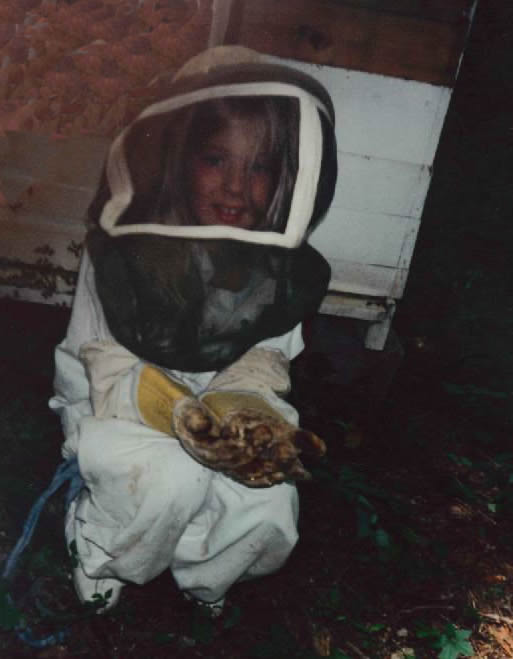
Last but not least, a year ago we took some bees to Crossville to Brother Glenn's house for the sour-wood flow and did not bring them home. Carolyn and I went up to do a spring inspection and Brother Glenn was waiting with his new bee suit, all white with no spots or dirt; a perfect picture of a new-bee.

We found the bees had done very well without me to bother them; in fact, one of the hives was one of the best wintered hives I’ve seen, but they were about to swarm. Something had to be done, but perhaps a little too late to prevent them from swarming. I used a double screen board on each of the hives, a device we use to temporarily separate the boxes for re-queening and swarm-prevention. In about 30 days, we will put them back together after assessing the queens and leaving the best one to head the colony. We also made a couple of splits; these were really strong hives. Saturday, Glenn was concerned the bees were confused and disorientated. Carolyn, who took the pictures while Glenn and I worked the bees, said who wouldn't be after that treatment? If they don't swarm, we can say what good bee keepers we are; if they do swarm, we will just say that once the bees get swarming on their minds, nothing can stop them ( I should be in politics). By the way, Glenn did very well and seems to have a feel for the bees, after I convinced him to stand closer and stop backing up.


A queen cell: a sign of intentions of swarming


I hope somewhere out there on the WWW, there is someone that that enjoys reading this blog half as much as I do putting it together. Also an update on the job posting for a new blog editor: we are no longer looking for a replacement. Jess is doing a fine job and despite her attitude. In fact, starting next year she gets a 100% raise (education pays off). Farewell until next time!

Happy trails to you!
-Greg

(A letter from the editor- The job posting/contract renewal negotiations/attitude adjustments may have delayed the posting of this blog a couple of weeks... ;)

Thursday, April 21, 2011

Special Delivery!

What a week!

Last weekend, Carolyn and I went to Athens, Ga to pick up bees (NUCS) from Jennifer Berry, for the bee farm as well as some for Jess. She is starting her own Bee Yard in Athens. These were some of the nicest bees I've seen; really, they were very NICE. They hardly got upset or irritated at all. They were very gentle. We were very pleased with them. I don't know what Jess will call her bee yard, maybe something like "Dudes Bee Ranch".


We rushed home early to make it easy on our cargo (we left before dawn. This is not unusual for us, but we had a reason this time). We arrived home safe and sound after taking the bees out for breakfast at McDonald's around Chattanooga. James and I installed the bees without a hitch; we've done that a few times now.

It's so much different than the first time some thirty years ago. I didn't know what or how to install the bees, but I was dumb enough to try and lucky enough to pull it off. Jess will be apprehensive in the beginning as well. My advice to any "new-bee" is do your homework first, than do what you think is best for the bees. Don't worry-- the bees have existed for thirty million years, despite well meaning beekeepers.

The first part of the week was spent catching up around the farm. Bees had to be fed, checked for swarm cells, and supers installed. Thursday, Friday, and Saturday the Tennessee Masters program class was held in Livingston. John A. Skinner was the professor. He is one of the best bee men anywhere; we were lucky to have had him. Twenty hours would of instruction would be a long time with someone not so prepared as he. The weather was stormy all three days, which made staying inside not so bad. We were fortunate not to have damage as other places did. It was almost a year ago that bad weather brought terrible flooding to our area. Read this article to learn more about that.

This is for sure the most exciting time of year in the bee yard; there is so much to do and so little time to do it. The bees are extra excited as well. Spring is wonderful and I feel blessed to part of it. I did my first queen graft for the year this week; only one took, but it was beautiful cell. Sorry, I don't have time to go into details. I will save that for another post.

In blog news, there was some discussion here at the apiary of looking for a new editor for the blog. We want someone who will do as good of a job as Jess, but who expects as little pay and as little thanks as she gets. We want some one to do the same job without the same "I'm the boss" attitude. If you know anyone interested in the job, please pass their name along.

-Greg

(Editors Note: I felt free to share this job opening, as I feel confident no one else will want my post. I did want to issue a warning to a certain beekeeper- It is not a good idea to get on the wrong side of your publicist...)

Here are some more pics from Jessie's installation.


Greg, showing off in T-shirt and shorts. :)


Tuesday, April 5, 2011

Updates, New Colonies, and Musings from the Bee Farm

As I have just finished reading Queen Rearing Essentials by Lawrence John Connor for the fourth time, I'm reminded of a quote from C.S. Lewis: “I can’t imagine a man really enjoying a book and reading it only once.” Queen rearing is big on my list this year, I think that is the height of beekeeping.

It seems most of the bees came through winter well with few exceptions. I lost the one of my best hives to "Whoknowswhat",the name I gave to the affliction that kills bees when I don't have a clue why. Actually, I do in this case, but I don't want to talk about it because it could reflect back to the beekeeper (or bad "bee-havior", no pun intended, or rather, no fun intended) and regardless, I'm not sure the real cause anyway.

The winter was bad, the spring was somewhat better. The bees seemed to fare well, and I must claim credit whether I deserve it or not. Beekeepers are charged with the task of swarm prevention as well as early spring build up; unfortunately, the two don't go hand and hand. I have reversed the hives that need it (putting the top hive on the bottom and bottom on top to give the queen room to lay eggs and prevent swarming. The queen will almost always move up to the top box and not move down, even if the top becomes crowded. The bees will think they have no room and will make preparations to swarm). I have split what needed to be split, meaning I took bees and brood from some to give space for egg laying to prevent swarming and ensure a good honey harvest .


Hanna, Catalina, and their dad Bennett, are pictured above, shaking their girls into their new home.

As always, as part of my giving back to the bee community, I have spent some time helping other beekeepers, cousin Dwight for one as well as others. This always is a learning experience for me and hopefully for them as well. One thing we are proud of is our effort in helping new- beekeepers get started. This year it was helping sisters Hanna and Catalina acquire bees to pursue their new hobby. They have been interested in beekeeping for some time, and they have visited and helped with our bees for several years . Sometimes I wonder if the draw is Carolyn's cookies she always makes when she finds out the girls are coming.


Carolyn and I are looking forward to traveling to Athens, Georgia to pick up bees at Jennifer Berry's Queenery and helping Jessie set her own apiary. Also we hope everyone will check out Jessie's new bee blog The Beeman's Daughter; for us, it is like reading a letter from our favorite Daughter (Jessie maintains that she is not favorite, just first. Our other "daughter", Sheba, went to rest many years ago after a devoted life of chasing chickens and protecting bicycles).


Greg and Eddie Cope pictured above setting up a Moodyville bee yard.

I recently spent some time with Eddie Cope of Pickett County who helped set up some hives I purchased from him . It is always good to spend time with someone as knowledgeable, has such a feel for bees, and willingness to share as Edd . I can't say enough about him; if I do Jessie will just edit it out anyway (the editor maintains that all judgement calls are in the best interest of our readers, and are not subject to shameless pandering). All in all, everything is going well here at Holt Bee Farm. Look for more frequent future updates. As we all know in the bee world, springtime is when it really gets exciting! Wishing you all a happy Spring!

Wednesday, February 9, 2011

Correspondence with the Queen Bee: Nosema

In January, we had some correspondence with the "Queen Bee" Jennifer Berry at UGA. She has done wonderful research and is just overall a very helpful bee keeper. Greg wanted to get her view on Nosema. He wanted to know if nosema is a problem for her hives and if so, what to do about it. Greg had read about it, but was reluctant to treat for it. Nosema is a parasite spread by spores, or rather spores are an indication of the parasite. If you would like to know more about this troublesome disease, check it out here. Healthy queen stock can help protect your bees from disease. Here is a picture of a marked queen.


Jennifer reported that she does not treat for nosema at the lab or with her own colonies at this time. She does check for spores periodically and has yet to see any. She mentioned that many people have been using Honey B Healthy (which is available through many bee supply companies like Brushy Mountain). She suggested just being aware of what you have in your hives can help. This can be done at home if you have a compound microscope and preparing the slides. Since we are located in Tennessee, she suggested John Skinner from UT as an excellent resource.

We very much trust Jennifer's advice. Greg has mentioned that if there is a Holy Grail of beekeeping, she knows where it is. We hope you and your bees benefit from this information.
If you would like more information, check out this document about diagnosing and treating nosema from UC Davis. The more information you get on this topic, the more informed your treatment decisions will be.

Wednesday, January 5, 2011

Hope, Change, and other Plagues

There are those that can and those can’t. And those that can’t, teach. I am fearful that I come in the last category destined to be a professor of last resort. I grew up hearing this “can and can’t” saying of old and it’s troubling to have put so much effect in to something I love so much, but still be unable to make everything work the way it should. I am rambling about Beekeeping after spending much time and work in the hobby that has become my obsession, it seems. I think I know less now than I did 30 years ago.

Taking into account the changes beekeeping has undergone in these 30 years, we may all be a little behind. There are at least two new kinds of mites, new species of hive beetles, dangerous pathogens both new and old, not to mention chemicals, which are now thought to be the cause of a new sort of hell on the poor honeybee. Not to be dramatic, but plagues of biblical proportions have been experience by both the honeybees and the bee keepers.

You may ask why someone so distressed would not just move on to something less stressful, like raising chickens. My wife said I couldn’t. Enough said.

Now that all the gloom and doom is out of the way, let’s get on with this article that is supposed to give hope to old and new bee keepers alike. The aforementioned warning is something a prospective new beekeeper should consider before buying their first bees. Once they get past all of that, let me tell them there is no other hobby or vocation that can give so much back to them in the way of satisfaction as bee keeping (and I have tried a few).

In light of sparking new excitement for beekeeping, I would like to list some of the joy I receive from beekeeping, or rather a listing of “Greg’s Favorite Things”.

· Making queens (my favorite)

· Working with Nucs and Splits

· Finding swarms, catching swarms, keeping swarms and figuring out why they swarm and dreaming up ways to prohibit swarms

· Wintering bees (this is most difficult)

· Experimenting with survival queens

· Harvesting and eating honey made by your own bees

· Just sitting and watching the bees go about what bees do and have for millions of years without us

Yes, it is worth my time and yours, if you are one that can enjoy just one of Gods greatest creations.

In closing, let me say I think one main trouble honeybees face today is PPB (Piss Poor Beekeeping). I’m guilty and I am sure many others are as well. Let’s all pledge to start the New Year with a promise to ourselves to learn more, do the best we know, and teach the little we do know to the next generation of beekeepers, in hopes that they will see a renewed love for the art of beekeeping.

Goodbye 2010!

Here is a holiday letter from our Bee Master here on the farm. Warmest wishes to you and yours for a blessed new year.

December is almost over. Our hives are all closed up with mouse guards in place, upper ventilation installed, and supers stored. We have done everything we know to help the bees survive another winter, except use chemicals for mites and other pathogens. I haven’t used chemicals in several years for a variety of reasons. One, because I think if you raise your queens and bees from survivor stock, the bees will work it out, like they have for millions of years before we started helping. Another couple of reasons could be stupid and stubborn and may do more harm than good, but with beekeepers moving bees all over the country, importing bees and pathogens the world over, plus bad beekeeping, what could we expect? Of course, all this high minded thinking has cost me lots of money and, at least for the short run, kills a lot of bees. I hope I live long enough to see beekeeping as it was when I first started fooling with them. For sure the hobby has been interesting for the past few years, as well as expensive and sometimes heartbreaking.

We have purchased some poplar lumber for supers, built them, and are now waiting for more lumber. I love working with it. We are also ordering frames and foundation, so this is a busy time for everyone here at Holt Bee Farm (of course that is just me most of the time).

Nucs have been ordered from Jennifer Berry, some for Tennessee some for Athens, Ga for our daughter Jess’s new bee yard. I am excited about that, She has been good help for me most of her life; I think she will make a good Apiarian.

Today is the last day of the year. It’s been about 60 degrees and the bees were out. I did not look inside, but everything looked great from the outside. We have had the coldest December I could remember, but the girls seem to have fared very well. I suppose I can breathe easy now. I got a call from Cousin Dwight and he reported the same; his girls were out and looking good. This is his first winter of beekeeping and I think he was worried they were all dead, even though his bees looked well when he put them to bed.

Every year I try to lay out new ideas I have put together from reading, studying, and experiences from the previous bee season. Then I try to put the ideas to use for the new year. Most of the time I find out I was wrong. The new idea for this year has to do with nucs and queen rearing for replacement of poor or missing queens, to replace dead outs, and even producing queens and nucs for possible sale. I think one should have a nuc for every full hive you own, just in case something goes wrong at the hive. My plan is that all these components work together: the hive, nuc, and queen rearing. You build the nuc up by taking brood from the hive, plus a queen. You can build a hive by simply making a nuc strong, and of course, you use the nuc and the hive to make a queen. By the way, in case someone doesn’t know, a nuc is just a hive in miniature.

I’m sorry if I have not made this clear, but it has taken me thirty years to come up with this idea. It is nothing new, but rather it is just a way to make everything in the bee yard work better to maintain healthy bees at less cost and to be more self-contained and less reliant on outside resources. A beehive is a super organism and my plan is to work within that mindset and back up our investment.

I have a special thanks and wish for a happy new year to my favorite and oldest follower Tom Pruitt of Georgia, for his support, friendship, and advice. Tom has done much for this beekeeper, as well as for the beekeeping community. He is like a brother to me. Thanks again to Tom and of course his lovely, "trophy" wife Debbie Sue.

All in all this has been an exciting year in beekeeping and life, since the two are the same for me. Jess and Adam have been able to spend some time with Carolyn and me over the Christmas Holiday and we are thankful for that. We now look forward to starting a happy new year as we wish everyone the same.

Bee Happy,

Greg

Wednesday, September 29, 2010

Swarmin' Norman

Ok, there is no Norman. But we will report about some swarms we have been seeing lately and also pass on some interesting links that you may be interested in.

Greg has spent the last month managing swarms and queens all over the region. According to Greg, every swarm is as exciting as the first one; so as long as his bees are staying put, swarms are good fun. After much experience as a bee keeper, one may find his or herself able to tell whether a hive is doing well or doing poorly just by passing by. This skill has helped Greg keep abreast of all situations in the fields.

Greg and Dwight have spent a lot of time together. As this is Dwight's rookie year in the field, Greg has spent much time teaching him the ropes and helping him manage a rowdy bunch of ladies. It seems as though his girls need constant reassurance. Speaking of drama queens, we have been working diligently to keep up our supply of queens so that we can replace who needs replacing without additional expense. David Laferney, a partner in grafting, didn't need his share of the queens from the most recent graft, but would rather have the combs. So Greg was happy to put those lovely ladies to work.

Here is some excellent info about Queenless Bees. This document helps you diagnose if your hive is queenless and perhaps at what stage of queenlessness you are experiencing. This FAQ from Bushfarms also helps answer other interesting common questions.

Also this is a beekeepers almanac that is very helpful in keeping up with what you should be doing. This is great for experienced and new beekeepers alike.

We also wanted to link to BeeKeeper Linda's visit to the Jennifer Berry Queenery. If you will remember, we have a few of her queens and have been nothing but pleased with them. Here is one post where we talk a little about them (and here is another).

More updates on Fall Maintenance and Winter Preparation soon!

Friday, September 3, 2010

The Story of Three Hives

Friday, August 20th was a perfect day to relax at the home apiary and enjoy the bees. We will report on three of the hives in which we have recently been making some changes.

Hive #1: This was a hive that held a newly grafted queen introduced with a double screen queen excluder. Four days before, nothing much was going on in this hive so Greg decided there were not enough bees in the top. So he decided to move some from the bottom to the top. However, these relocated bees did not show their corporate ID's at relocation and it turns out Greg moved the Freight Division rather than the H.R. department (in apiarist's terms, he moved the Field bees, not the nurse bees). The way we discovered this problem was that the bees went right back home to the bottom, but not before they had cleaned out the top of the hive completely!

Hive #2: Greg had earlier observed that this one just wasn't right. As usual, his diagnosis was correct. This hive has a laying worker, which is a big problem since she can only lay Drone bees (for our younger generation, they are the "Scrubs" of the hive: no job, little ambition, no ummm...stinger). This situation calls for swift action.


Hive #3: This was a nuc with a beautiful queen who had been made into a full-fledged hive with lots of promise. However, looks are sometimes deceiving. Despite her beauty, she was useless in the laying department. This situation may call for a manual coup d'etat.

With news like this, there could be no more relaxing with the hives. Greg turned to the bee lair for a planning session.

Saturday morning after honey and biscuits, Greg and James took off on a "fix or destroy" mission (in this writer's opinion, that phrase could describe each mission these two embark upon). Here are the updates on these by hive.

Hive #1: Here they found the old queen and took her out of the hive to place her in temporary confinement. Plans are to wait 23 hours before replacing her with a small breeding nuc and a new proven queen by the newspaper method. This method is simply placing a newspaper between the main hive and the nuc, placing small cuts in the paper, hoping the merger will be peaceful.

Hive #2: If you recall, this is the hive with the laying worker. They began by taking a nuc and a queen from an out yard (Jimmy's yard) and placing it in the place of the old hive. They took the old hive about 300 feet away and dumped all the bees out on a sheet, with hopes that only the worker bees would make their way back to the hive. Greeting the returning bees would be the new nuc and new queen placed in the old hive. Greg put a queen excluded on the bottom box in hopes that she would deter the drones and laying worker from returning. We have not had very much luck in instances of laying workers. In the past, we have been successful by simply placing a frame of open brood in the old hive. This had to be done twice, but they finally made a new queen.


Hive #3: This hive also got a little treatment with the newspaper method. We will continue to post updates on how the sisters are getting along this fall!

Monday, August 23, 2010

Lord willing the creek won't rise...

The French writer Stendhal said it best when he commented, "The man of genius is he and he alone who finds such joy in his art that he work at it come hell or high water. " Well, we've at least been tested through high water this week, and hope is all we have to keep hell at bay for now.

Last week our area got about 8 inches of rain in just a couple of hours. Check out some pictures here. As most of our apiaries scattered around town are well above flood-prone areas, the bees were safe. However, Greg did have to wade through swift flood waters to rescue our entire marketing division (a hand-painted "Honey For Sale" super placed down beside the road!). We of course were luckier than some to escape the damage this heavy rainfall has ravaged upon our state this summer.

In other news, we wanted to update everyone on the results of our latest queen grafting. About 50% of the grafts took and then about 50% of those mater and are now laying. They are looking great so far!

Greg is also working on a new experiment. He took one of the nucs that was unsuccessful at creating a laying queen and other one that we had moved the old queen out for re-queening and took them to a couple of nucs with eggs and larva. He grafted some of the larva in the correct stage of development and placed them in plastic cups and inserted them in the queen-less nucs. Three days later, one was beginning to build out the queen cell and the other had failed. You can see the queen cell in the picture below.


Upon closer inspection, Greg had over-looked a queen earlier, who have just begun laying. This of course was good news. Inspired by good news of early success in both nucs, Greg decided to do two more nucs the same way to see if this method will produce quality queens. We can neither promote or refuse this method at this time because of its unconventional nature; however, this was a good opportunity to get some more grafting experience without too much of a commitment.

Some of the hives are already receiving sugar sugar to help build up their supplies for the winter. We prefer not to feed, but we MORE prefer the bees not to starve. We can all agree that would be a terrible way to go.

Updates on the status of the water cannon experiment... it's not good. The few survivors have since been moved to another hive, which effectively ends that chapter. Speaking of terrible ways to go....death by water cannon is not at the top of my list.

Wednesday, August 18, 2010

Back to School...Back to School....

In light of schools starting everywhere, we wanted to share a neat article shared with us by Alan Wood. The article is entitled "10 Valuable Life & Business Lessons You Can Learn from Bees". It highlights many of the enviable characteristics of bee and bee society. Enjoy!

Thursday, August 5, 2010

Blue Eyed Queen

Just a few minor updates for the week:

We are anxiously awaiting the results of our mating nucs we mentioned in the grafting post. Greg has already had a peek of one and the prognosis is not good. This is the one with just a few bees. We are optimistic about the others, but time will tell (time should tell us on Saturday).

Greg and James have cooked up more adventure. A small swarm dared to venture out of the bee man's reach, much to their own detriment. After repeated warnings to stay OUT of the trees, Greg proceeded to attempt to spray them out of the tree with the water hose. A bait hive was placed on the ground as their new home and the Bee Squad went on the offense with the hose. On the fourth down (fourth time knocking them down and them going right back up to the tree that is), Greg decided to drop back and punt, waiting to see what plays the swarm had up their sleeve. The swarm, severely tired out by the watery pounding decided home wasn't such a bad place to be. They retreated to the safety of the bait hive and settled in for the night. While Greg and James emerged victorious, there was little basking in the glow of their victory, as few of the small swarm were strong swimmers (read: survivors of Hurricane Greg). Greg strongly urges our readers NOT to try this at home for obvious reasons. We are feeding what is left of the swarm, but have not located the queen (who was most likely a victim of the watery assault).

Similarly, as you know Greg attended the Apicultural Society Conference at TTU. One of the classes he took was a Finding/Marking Queens class taught by Bill and Nancy Troup. This was a wonderful class and has helped Greg very much in finding and marking his queens. The first queen he found, he marked has blue eyes, one blue wing, and a blue mark on her abdomen. She should be easy to find again, as long as the rest of the hive does not tune into TLC's "What Not to Wear" and kill her for being too flashy.

The honey harvest is pretty much over for the summer. We are now getting ready for winter and selling our honey. It is sure is going fast. We have many loyal customers who were waiting anxiously and have stocked up again until next summer.

Tuesday, July 27, 2010

Past and Present

Warning: Today's post is graphic!

(As in, we only have pictures to post. Enjoy!)


Future #1 Sales Person...


About 20 years later, still learning from the Master.


A HOT day! This is their air conditioning.

The Master at work.

Beautiful capping

Lined up like soldiers


One of the new hive locations

Also, just in case you are very observant, it is not perpetually January 2007 in our world. Our camera is calenderically challenged. :)


Monday, July 26, 2010

Back to School! (And an Update on Grafting)

The Heartland Apiculture Society's 9th Annual Conference was held July 8-10 at Tennessee Tech University. Greg attended this conference and was pleased to take sessions by Ed Holcome, Bill and Nancy Troup, Kent Williams, and many more. Some topics that were particularly interesting were Seasonal Hive Management, Hive Increase/Making Nucs, Queen Finding and Marking, and Queen Rearing. According to Greg, this was the best conference yet! He learned many new things and got to spend time with lots of beekeeping friends, like Eddie Cope and James Crockett of Pickett County and David Laferney of Putnam County.

As previously mentioned, we tried a little grafting on July 5th. We grafted 23 queen cells in one week. Greg placed the only cell that was successful in a mating hive. 4% is not too successful, but we were pleased that the one we successfully bred was from the Jennifer Barry queen. One reason for this low rate of success could be attributed to the fact that Greg doesn't like to do things by the book. :) Often he has found that he learns more by fumbling around and trying things (or rather is FORCED to learn more BECAUSE of fumbling around). But live an learn, right?


So grafting round two... On July 14th, Greg and David Laferney tried again, grafting 30 larva. David furnished the starter hive: one running over with bees with no queen. Greg provided the larva from the Barry queen. On the 16th, we determined that we had about a 50% success rate! This weekend Greg installed the cells in mating nucs. We will wait to see the results of that.


One more update pertains to one of our new friends we have mentioned a couple of times in this blog, Dwight Johnson. Greg went to check on him and his bees on July 16th; because of his hard work and dedication, he has been given an A+ in bee keeping from Greg Holt, Ph. Bee.

Thursday, July 8, 2010

Grafting Again

Earlier this week, Greg decided to give grafting another shot (we have had fair success with this for producing extra queens). He started at the Jennifer Berry hive, since they have settled in nicely and currently are the best performing queens we have. He pulled a frame of eggs, or brood, and took it to the bee lair (or the basement, as laymen may call it). He grafted 23 larva into the prepared plastic cups (fake queen cells) and then installed the cups in a queen-less upper hive body that he had made by shaking all of the bees in the front of the hive and installing a queen excluder underneath, so that only the worker bees can go into the second story.


This is a queen cell (looks like a peanut with a hole in the top). Pic is courtesy of this site.

This is a plastic queen cup. Pic is courtesy of this site.

The queen-less hive body contains brood. The idea is to keep the queen in the lower hive body performing as usual, while in the top hive body, the nurse bees will consider themselves queen-less because of the excluder. Then they should proceed to make queens from the grafted larva.

In about 8-10 days, Greg plans to retrieve the queen cells and place them in a mating hive, which is a small hive prepared for this purpose with one frame of bees and food (like a honeymoon suite, if you will). We will see what kind of success we have this time.

We don't need an abundance of queens, yet it would be nice to have a supply ready to replace old or poorly performing queens before the weather starts getting cold. It would be extra nice to have a few extra to share or sell (Probably only to local buyers...cheapqueens.com turned out to be a bad idea).

Greg has begun robbing and is spreading the harvest out over the month of July. The honey, of course, is the best we've ever had. Yet, we have never experienced a year where it WASN'T the best we've ever had. For the record, it is always a true statement.

In other apiary news, we have located two new hives to Crossville, TN. We hope that the higher elevation will yield some sour wood honey, famous in that part of the region. If that is successful, we will begin looking for a location for more elaborate extension to the east.

Tuesday, June 29, 2010

SWARM!


As Greg arrived home from town last week, he saw the biggest swarm he had ever seen. It looked as though all of the bees were making a run for it! The air was FILLED with bees. He watched it for about a half hour until it finely landed about 40 feet up in a red oak, much too high for a wise man to even think about going after it.

(You can see where this story is going...)


It only took a little encouragement from James to get Greg up on the ladder with the saw. Once the cut was complete, the bees decided to test Greg once more by going even HIGHER! They settled nicely about 75 feet up in the tree and closed shop for the night.

It sure would have been nice to hive them, since there were probably fifteen pounds of bees on the loose, enough to fill a wash tub halfway. But that is how it goes. Greg says maybe next time. Bean says maybe next time he will stay out of the trees.